 English
×
Search
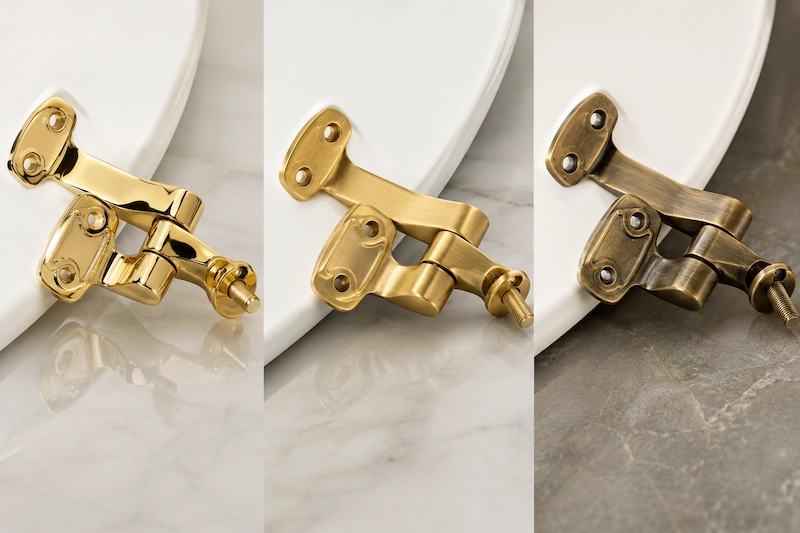
Brass toilet seat hinges are available in three distinct surface finishes, and choosing between them involves more than just picking the one that looks best in a product photo. The finish affects how the hinge wears over time, how much maintenance it requires, how it fits into your bathroom's overall design, and even how visible fingerprints and water spots are on the hardware.
This guide covers the practical differences between polished brass, brushed brass, and antique brass toilet seat hinges to help you select the right finish for your specific bathroom environment and design goals.
Polished brass has a smooth, mirror-like surface with a bright golden shine. It's the most reflective of the three finishes and has been a staple in traditional and luxury bathroom design for decades.
How it's made: The brass surface is buffed to a high gloss and then typically sealed with a clear lacquer coating to prevent oxidation and maintain the shine.
Visual character: Warm gold with high reflectivity. Brightens dark bathrooms and creates a formal, classic aesthetic.
Brushed brass features a satin or matte finish with fine directional lines across the surface. It has a softer, more muted golden tone compared to polished brass.
How it's made: The brass surface is abraded with a wire brush or abrasive belt to create a uniform textured finish. A protective lacquer may or may not be applied.
Visual character: Subdued warm gold with low reflectivity. Works in both contemporary and transitional bathroom designs.
Antique brass has a darkened, aged appearance with depth and color variation across the surface. It mimics the natural patina that brass develops over decades of exposure.
How it's made: New brass is chemically treated or oxidized to accelerate the darkening process, then sometimes lightly polished on raised areas to create a two-toned effect that highlights surface detail.
Visual character: Deep bronze-brown tones with warm gold undertones. Strongly associated with vintage, heritage, and period-correct restoration projects.
| Feature | Polished Brass | Brushed Brass | Antique Brass |
|---|---|---|---|
| Reflectivity | High (mirror-like) | Low (satin/matte) | Very low |
| Color Tone | Bright warm gold | Muted warm gold | Dark bronze-brown |
| Fingerprint Visibility | High | Low | Very low |
| Water Spot Visibility | High | Moderate | Low |
| Cleaning Frequency | Most frequent | Moderate | Least frequent |
| Design Style | Traditional, formal | Contemporary, transitional | Heritage, vintage, rustic |
| Scratch Visibility | Moderate | Low (texture hides scratches) | Very low (textured and dark) |
| Typical Lacquer Coating | Yes (glossy clear coat) | Varies | Sometimes (matte clear coat) |
The primary concern with polished brass hinges is maintaining the bright finish. If the hinge has a quality lacquer coating, the shine will remain for years with basic cleaning. However, the lacquer on a brass toilet seat hinge is vulnerable at friction points — specifically where the hinge pins rotate against the hinge body. Over time, this friction wears through the lacquer, exposing bare brass underneath.
Once exposed, bare brass begins to oxidize. In a bathroom environment, this oxidation happens faster due to humidity and cleaning products. The result is uneven darkening: the protected areas stay bright while the friction points turn dark, creating a patchy appearance.
Some homeowners actually prefer this natural aging and allow the entire hinge to develop patina uniformly. Others want to maintain the polished look, which requires periodic relacquering or regular polishing with brass care products.
The textured surface of brushed brass is inherently more forgiving of wear. The fine directional lines in the finish help disguise minor scratches that would be immediately visible on a polished surface. If the hinge develops wear at friction points, it's far less noticeable because the existing texture masks the variation.
Brushed brass also tends to collect less visible grime and soap residue because the matte surface doesn't show water spots and fingerprints the way a polished surface does. For busy family bathrooms where frequent cleaning isn't realistic, this low-maintenance characteristic is a genuine functional advantage, not just an aesthetic preference.
Antique brass hinges are already finished to look aged, so additional wear and oxidation don't detract from the appearance — they enhance it. A brass toilet seat hinge in antique finish is essentially maintenance-free from an aesthetic standpoint because the finish is designed to look like it has already been through decades of use.
This makes antique brass the most practical choice for situations where the hinges will see heavy use and regular exposure to moisture but you don't want to invest time in maintaining the finish. It's also the most forgiving finish if you're using cleaning products that might strip lacquer from polished surfaces.
Polished brass is the classic pairing for:
Clawfoot or freestanding bathtubs with brass feet
Pedestal sinks with brass taps
Chandeliers or brass-framed mirrors
Marble or ceramic tile with warm undertones
Wainscoting or traditional millwork
In this context, the high-shine golden finish contributes to an overall sense of period correctness and formality. The brighter the brass, the more traditional the effect.
Brushed brass has become one of the most popular finishes in contemporary bathroom design over the past several years. Its appeal lies in providing warmth without the formality of polished brass:
Pairs well with matte black, concrete, and natural stone
Works alongside flat-panel or handleless vanity doors
Complements frameless glass shower enclosures
Balances cool gray and white color schemes with warm metallic accents
Coordinates with brushed nickel or stainless steel fixtures in mixed-metal designs
The satin finish also aligns with the broader design trend toward matte and textured surfaces in modern interiors.
Antique brass is the natural choice for:
Victorian or Edwardian bathroom restorations
Farmhouse or cottage-style bathrooms
Bathrooms with reclaimed or repurposed materials
Spaces with exposed brick, aged wood, or copper accents
Powder rooms designed with a sense of history
The darkened finish tells a story that polished and brushed brass cannot replicate. For period-accurate restorations, antique brass is often the only appropriate choice.
Weekly: Wipe with a soft, damp cloth. Dry immediately to prevent water spots.
Monthly: Apply a brass-safe polish if the hinge is unlacquered. For lacquered hinges, use only water or a non-abrasive cleaner — brass polish will strip the lacquer.
Annually: Inspect the lacquer coating for wear at friction points. If the lacquer is failing, consider having the hinge professionally relacquered or embrace the patina and remove the remaining lacquer with acetone.
Products to avoid: Abrasive powders, steel wool, ammonia-based cleaners, acidic solutions (vinegar, lime removers).
Weekly: Wipe with a soft, damp cloth. Dry with a lint-free cloth. The satin finish hides water spots well, so immediate drying is less critical than with polished brass.
Monthly: No special treatment needed. If the finish dulls, a gentle rub with the grain using a microfiber cloth restores the sheen.
Products to avoid: Abrasive scrubs, wire brushes, strong chemical cleaners that can strip the protective coating.
Weekly: Wipe with a soft, damp cloth. Dry if desired, though water spots are virtually invisible on this finish.
Monthly: No maintenance required beyond basic cleaning.
Products to avoid: Brass polish (it will remove the antiqued finish), abrasive cleaners, steel wool.
Yes — with intention. Mixing brass finishes is an established design technique that adds depth and visual interest, but it requires a deliberate approach rather than random combination.
Anchor with one dominant finish: Choose one brass finish for the largest or most visible elements (faucet, shower trim) and use a different brass finish for smaller accents (a brass toilet seat hinge, towel ring, cabinet pulls).
Contrast intentionally: Pairing polished brass with antique brass creates a strong contrast that can look dramatic and curated. Brushed brass with antique brass is a subtler combination that feels more natural.
Keep proportions in mind: Use the more subdued finish (brushed or antique) on larger elements and the brighter finish (polished) as an accent, or the space may feel visually heavy.
Maintain metal family consistency: Mixing brass finishes is acceptable because they're in the same metal family. Avoid mixing brass with chrome or nickel in the same immediate visual area — the cool/warm contrast can feel unintentional.
Beyond finish selection, several practical factors determine whether a brass hinge will perform well in your specific installation.
This is the single most important distinction. A solid brass toilet seat hinge is made entirely from brass alloy, offering genuine corrosion resistance throughout. Brass-plated hinges have a base metal (typically steel or zinc alloy) with a thin brass coating that wears through at friction points, exposing the vulnerable base metal underneath.
Solid brass hinges cost 2–3 times more than brass-plated versions but last 3–5 times longer. For bathroom applications where moisture exposure is constant, the solid brass option is almost always the better investment.
Verify the hinge style matches your toilet seat:
Standard straight hinges: Pins run parallel to the mounting posts. The most common configuration.
L-shaped hinges: Pins sit at a right angle to the mounting posts. Common on European toilet designs.
Barrel hinges: Cylindrical design with the pin enclosed in a round barrel. Often found on premium seats.
Platform hinges: Feature an elevated mounting platform. Used on raised or thick toilet seats.
Measure your toilet bowl's hinge mounting holes before ordering. The critical dimensions are:
Center-to-center distance between the two mounting holes (typically 140mm–170mm)
Hole diameter (standard is approximately 10mm)
Distance from the mounting holes to the back edge of the bowl (determines whether the seat will sit correctly)
Many modern brass hinge options include integrated soft-close dampers. If your current seat lacks this feature, upgrading the hinge is an opportunity to add it. The soft-close mechanism is built into the hinge barrel and doesn't change the external appearance of the hinge.
| Finish | Solid Brass (per pair) | Brass-Plated (per pair) | Value Assessment |
|---|---|---|---|
| Polished | $18–45 | 6–15 | Solid brass worth the premium for longevity |
| Brushed | $20–50 | $7–18 | Most popular premium option currently |
| Antique | $22–55 | $8–20 | Commands slight premium due to finishing process |
The price difference between finishes within the same quality tier is relatively small. The much larger cost gap is between solid brass and brass-plated construction. If you've decided on a brass finish for your bathroom, invest in solid brass — the finish choice is aesthetic, but the construction quality determines how long the hinges actually last.
Unlacquered polished brass can develop a greenish patina (verdigris) after extended exposure to moisture and acids, but this process takes many years in a typical bathroom environment. Lacquered polished brass won't develop verdigris as long as the lacquer coating remains intact. If you notice the brass turning green, the lacquer has failed at that point and the bare brass is oxidizing. A brass polish will remove the green patina and restore the golden color.
Current design trends strongly favor brushed brass, and it has been gaining popularity for nearly a decade. The warm metallic finish complements the dominant bathroom design trends of natural materials, earth tones, and matte surfaces. While no trend is permanent, brushed brass has enough momentum and versatility to remain relevant for the foreseeable future. It's a safer long-term choice than trend-specific finishes like rose gold or champagne bronze.
Technically yes, but it's rarely practical. Converting polished brass to antique brass requires chemical darkening solutions and some expertise. Converting any finish to brushed requires abrasive equipment and consistent technique. The results are usually inconsistent compared to factory-finished hinges. Given that a new set of brass toilet seat hinge fittings costs15–50, replacing them is almost always more cost-effective than refinishing.
Antique brass hides wear best by a significant margin. The darkened, textured finish is designed to look aged, so additional wear and oxidation blend in rather than standing out. Brushed brass is the second-best option — its satin texture disguises minor scratches and water spots. Polished brass shows every fingerprint, water spot, and surface scratch most visibly, requiring the most ongoing maintenance to keep looking pristine.
The finish you choose for your brass toilet seat hinges should align with your bathroom's design language, your tolerance for maintenance, and the level of daily use the hardware will receive. Polished brass makes a formal statement. Brushed brass offers contemporary warmth with lower maintenance. Antique brass delivers authentic character with the least upkeep.
Explore the full range of brass toilet seat hinges at Likegro, along with matching stainless steel and plastic options for every bathroom application. For custom finishes, bulk orders, or project specifications, the Likegro team is available to help you select the right hardware for your installation.
Do you have questions or comments about any of our bathroom hardware & slow close toilet seat? We want to hear from you.
Suite 2206, No. 888 North Sichuan Road, Shanghai, 200080, China