 English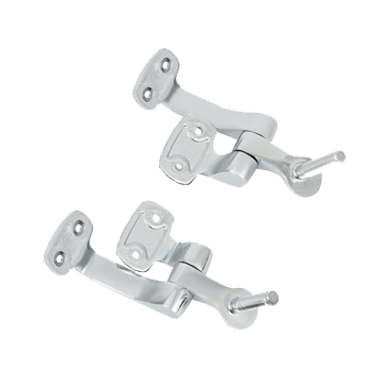
×
Search
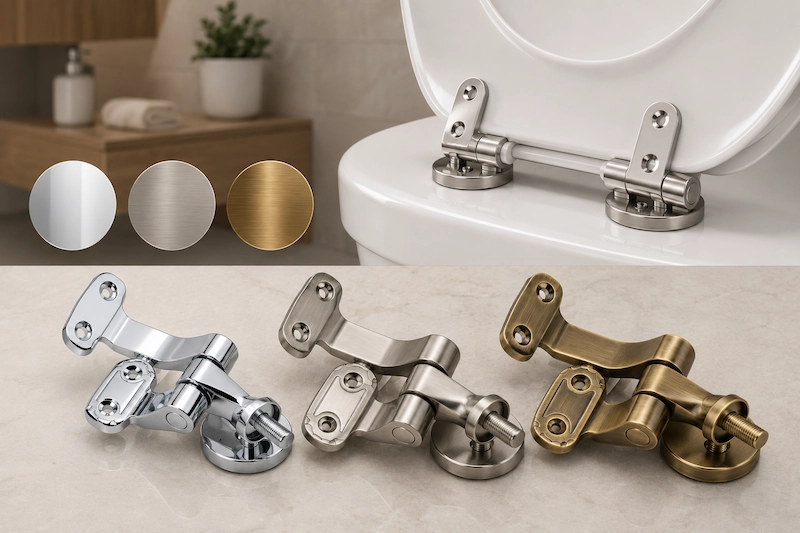
The material of your toilet seat hinge directly determines how long it lasts, how much maintenance it requires, and how well it holds up in your specific bathroom environment. Yet most people never think about hinge material until the existing one breaks, rusts, or starts making the seat wobble — at which point they buy whatever the hardware store has in stock and repeat the cycle a few years later.
This guide walks through the decision from a specifier's perspective: which material performs best under which conditions, what the real cost differences are over time, and how to match the hinge to your bathroom rather than the other way around.
Toilet seat hinges are manufactured in four primary material categories. Each has distinct performance characteristics that make it more or less suitable for specific applications.
| Material | Corrosion Resistance | Typical Lifespan | Price Range | Best Application |
| Plastic | Excellent (no metal to corrode) | 5–10 years | $3–12 | Budget, guest baths, temporary use |
| Stainless Steel | Excellent (inherent alloy protection) | 10–20+ years | $8–25 | Most residential and commercial |
| Chrome-Plated | Moderate (relies on surface plating) | 3–8 years | $4–12 | Budget, low-humidity baths |
| Solid Brass | Very Good (natural alloy resistance) | 15–30+ years | $15-50 | Premium, heritage, coastal |
Plastic toilet seat hinge products are often dismissed as cheap or inferior, but modern engineering plastics have legitimate advantages in the right applications. The key is understanding when plastic is genuinely the best option versus when it's simply the cheapest.
Hard water areas. In regions with high mineral content in the water supply, metal hinges — even stainless ones — can develop mineral scale buildup at the hinge pin. This scale causes stiffness, squeaking, and eventually prevents the hinge from operating smoothly. Plastic hinges don't attract mineral deposits the same way, making them surprisingly practical in hard water environments.
Chemical exposure. If your cleaning routine involves bleach, strong acids, or aggressive descaling products, plastic is chemically inert and won't degrade from contact with these substances. Metal hinges, particularly chrome-plated ones, can suffer finish damage from the same products.
Retrofit simplicity. Plastic hinges are lightweight, easy to trim or modify with basic tools, and forgiving of slight measurement errors during installation. For DIYers replacing hinges for the first time, this workability reduces the risk of installation problems.
Specific configurations. Some toilet seat designs use specialized hinge shapes that are only readily available in plastic. Toilet seat hinges plastic L shaped configurations, for instance, are common on European-designed compact toilets where the hinge pins sit perpendicular to the mounting posts. While metal versions exist, plastic L-shaped hinges offer wider availability and easier sourcing.
Heavy or premium toilet seats (wood, bamboo, heavy resin) can stress plastic hinges beyond their design capacity
Commercial restrooms with hundreds of daily use cycles
Bathrooms where the hinge appearance matters as part of a coordinated hardware scheme
Any application where you want the hinge to last more than 10 years without replacement
Standard straight plastic hinges: The most common configuration, with mounting posts and hinge pins in a straight line
Toilet seat hinges plastic L shaped: Designed for seats where the hinge pins sit at a right angle to the mounting posts
Quick-release plastic hinges: Feature a push-button or squeeze mechanism that releases the seat for cleaning
Soft-close plastic hinges: Integrate a damper mechanism for gentle closing, typically using a plastic body with internal hydraulic components
Stainless steel toilet hinges occupy the sweet spot between cost and performance for the majority of bathroom applications. They're the default recommendation for most homeowners, contractors, and commercial specifiers for good reason: they perform reliably across a wide range of conditions without requiring special maintenance.
Through-material protection. Unlike chrome-plated hinges that rely on a thin surface layer for corrosion resistance, stainless steel's protection is built into the alloy itself. The chromium content (typically 18% in Grade 304 stainless) forms a self-repairing passive layer across the entire cross-section. Even if the surface is scratched, dented, or worn at friction points, the underlying material maintains its corrosion resistance.
This characteristic is what sets stainless steel toilet seat hinges apart from every plated alternative. A plated hinge that gets scratched at the hinge pin becomes vulnerable to corrosion exactly where it experiences the most friction and moisture. A scratched stainless hinge is simply stainless steel with a scratch — functionally identical to an unscratched one.
Cleaning product tolerance. Stainless steel handles virtually all common bathroom cleaning products without damage. Bleach, ammonia, vinegar, commercial bathroom cleaners, descalers — none of these degrade the material or its finish. This matters because the area around the toilet seat hinge is one of the most frequently cleaned (and chemically exposed) areas in any bathroom.
Load-bearing capacity. A stainless steel toilet seat hinge maintains its structural rigidity over years of daily use. The hinge pins resist deformation, and the mounting posts don't develop the elongation that softer metals (like zinc alloy) experience. The result is a seat that stays firmly attached without developing the gradual wobble that signals an aging hinge.
| Grade | Chromium | Nickel | Molybdenum | Best For |
|---|---|---|---|---|
| 304 | ~18% | ~8% | None | Standard residential and commercial bathrooms |
| 316 | ~16% | ~10% | ~2% | Marine environments, poolside bathrooms, areas with salt air |
For 90% of applications, 304-grade stainless steel is the appropriate specification. The premium for 316-grade is only justified when the hinges will be exposed to chlorides — either from salt air in coastal locations or from chlorine in pool environments.
Brushed (satin): Fine directional lines, low reflectivity. Hides scratches and fingerprints. The most popular finish for residential bathrooms.
Polished (mirror): High-shine, reflective surface. More formal appearance but shows fingerprints and water spots.
Matte: Increasingly available in contemporary designs. Very low maintenance.
A brass toilet seat hinge in solid brass represents the premium end of the market. Brass offers inherent corrosion resistance (it's a copper-zinc alloy that naturally resists oxidation), distinctive warm aesthetics, and exceptional longevity. The trade-off is higher cost and, depending on the finish, potentially more maintenance.
Coastal and marine environments. Brass performs exceptionally well in salt-air environments where even stainless steel can develop surface staining over extended periods. For beachfront properties, boats, and waterside commercial buildings, solid brass hinges often outlast stainless steel.
Heritage and restoration projects. Period bathrooms from the Victorian, Edwardian, and early modern eras originally used brass hardware. A faithful restoration demands brass fittings, and the warm golden tone of a brass toilet seat hinge is integral to achieving the correct aesthetic.
Design coordination. In bathrooms where the dominant metal finish is brass — brass faucets, brass towel bars, brass mirror frames, brass lighting fixtures — using brass toilet seat hinges maintains visual consistency. The relatively small size of the hinge doesn't diminish the impact of mismatched metals in a fully coordinated bathroom.
Long-term investment. Over a 20+ year timeframe, solid brass hinges that outlast 2–3 sets of cheaper alternatives become the more economical choice when you factor in the cost and effort of repeated replacements.
This distinction cannot be overstated. Brass-plated hinges use a base metal (typically steel or zinc alloy) with a thin electroplated layer of brass on the surface. They look like brass when new but perform like the base metal once the plating wears through at friction points.
A solid brass toilet seat hinge is brass throughout — the hinge body, pins, and mounting hardware are all brass alloy. The corrosion resistance, the patina development, and the longevity are all genuine brass characteristics, not cosmetic.
Always confirm "solid brass" in product specifications. If the description says "brass finish," "brass tone," or "brass color," it's almost certainly plated.
The same hinge material can perform dramatically differently depending on the bathroom it's installed in. Here's how environmental factors should influence your decision.
Poor ventilation (no exhaust fan, small window, high humidity after showers):
Best choice: Stainless steel toilet seat hinges or solid brass
Avoid: Chrome-plated hinges, uncoated brass (will patina rapidly)
Acceptable: Plastic toilet seat hinge (no corrosion concern, but may degrade faster in high heat)
Good ventilation (power exhaust fan, window that opens regularly, low ambient humidity):
All materials perform adequately
Choose based on budget and aesthetic preference
Hard water (high calcium/magnesium content, visible scale on fixtures):
Plastic and brass resist scale buildup better than stainless steel
Stainless steel is still acceptable but may require periodic descaling of the hinge pin
Chrome-plated hinges are vulnerable to scale accelerating plating wear
Soft water or municipal treated supply:
All materials perform well
No water-quality-driven constraints on material choice
Heavy use (family bathroom, commercial restroom, shared accommodation):
Stainless steel toilet hinges are the clear first choice for durability and low maintenance
Solid brass is the premium alternative
Plastic hinges will show wear faster under heavy use cycles
Light use (guest bathroom, powder room, en-suite in a single-occupant home):
Plastic hinges offer adequate longevity at the lowest cost
Any metal option is more than sufficient
Use this practical decision tree to arrive at the right material for your situation:
| If your top priority is... | Choose... |
|---|---|
| Lowest upfront cost | Toilet seat hinges plastic |
| Best long-term value | Stainless steel toilet seat hinges |
| Premium aesthetics | Solid brass |
| Matching existing brass fixtures | Solid brass (matched finish) |
| Heavy commercial use | Stainless steel toilet hinges (316 grade for wet areas) |
| Hard water resistance | Plastic or solid brass |
| Quick DIY replacement | Plastic (easiest to fit and adjust) |
Before ordering, confirm:
Hinge configuration: Standard straight, toilet seat hinges plastic L shaped, barrel, or platform style — match your existing hinge type
Mounting hole spacing: Measure center-to-center distance between holes on the toilet bowl
Mounting type: Top-fix (expanding bolts from above) or bottom-fix (nuts from below) — depends on your toilet design
Seat compatibility: Confirm the hinge pin diameter matches the holes in your toilet seat
| Material | Initial Cost | Expected Replacements (10 years) | Total 10-Year Cost |
|---|---|---|---|
| Plastic | $5 | 1–2 replacements | $10–15 |
| Chrome-plated | $7 | 1–2 replacements | $14–21 |
| Stainless steel | $15 | 0 replacements | $15 |
| Solid brass | $30 | 0 replacements | $30 |
While plastic has the lowest entry price, stainless steel toilet seat hinges offer the best 10-year total cost because they typically don't need replacement within that period. Solid brass is the most expensive but provides 20+ years of service.
Yes, in most cases. Toilet seat hinges follow several common configurations, and replacement hinges are designed to be compatible with standard toilet seats. Here's what to verify:
For plastic-to-metal upgrades: A stainless steel toilet seat hinge or brass toilet seat hinge can replace a plastic hinge on the same seat as long as the hinge pin diameter and configuration match. Many universal replacement hinge kits are designed specifically for this scenario.
For metal-to-metal upgrades: Swapping chrome-plated hinges for stainless steel or brass is straightforward when the mounting pattern is the same. The upgrade improves durability without requiring a new seat.
Configuration exceptions: If your toilet uses a proprietary hinge design (common with some Japanese washlet seats and certain European brands), you may need to source the replacement from the toilet manufacturer rather than using a universal hinge kit.
Solid brass typically lasts the longest — 15 to 30+ years in residential use — due to its natural corrosion resistance and structural rigidity. Stainless steel toilet seat hinges are a close second at 10 to 20+ years, with the advantage of requiring less maintenance. Both significantly outlast chrome-plated hinges (3–8 years) and plastic toilet seat hinge options (5–10 years).
Modern toilet seat hinges plastic products are genuinely serviceable for many applications. They're corrosion-proof, lightweight, easy to install, and cost-effective. They're a practical choice for guest bathrooms, rental properties, and hard water areas. Their limitation is in high-use or heavy-seat applications where the plastic may fatigue over time.
Quality 304-grade stainless steel toilet hinges are highly resistant to rust under normal bathroom conditions. Surface contamination from iron particles (transferred from steel wool, iron tools, or iron-rich water) can cause rust-like staining, but this is a surface issue that cleans off easily. Genuine structural rusting of 304 stainless steel in a bathroom setting is extremely rare.
Look at the hinge from the side. If the hinge pin (the rod that the seat rotates around) runs at a 90-degree angle to the mounting posts (the parts that bolt to the toilet), you have an L-shaped hinge. If the pin runs parallel to the mounting posts, it's a standard straight hinge. Toilet seat hinges plastic L shaped configurations are common on certain European toilet brands and compact toilet designs.
Yes, for bathroom applications. The humidity, moisture, and chemical exposure in a bathroom will eventually wear through brass plating at the hinge friction points. Once the plating wears through, the base metal (usually zinc alloy or steel) corrodes quickly. A solid brass toilet seat hinge provides genuine brass performance throughout its entire structure, not just on the surface.
Choosing the right toilet seat hinge material isn't complicated once you understand how your bathroom environment, usage patterns, and design preferences map to each option's strengths. For most situations, stainless steel toilet hinges deliver the best balance of performance and value. Plastic hinges serve specific practical needs. Brass hinges deliver when aesthetics and longevity are the priority.
Browse the complete selection of stainless steel toilet seat hinges, plastic toilet seat hinges, and brass toilet seat hinges at Likegro. For project specifications, custom requirements, or bulk pricing, reach out to the Likegro team directly through the website.
Do you have questions or comments about any of our bathroom hardware & slow close toilet seat? We want to hear from you.
Suite 2206, No. 888 North Sichuan Road, Shanghai, 200080, China