 English
×
Search
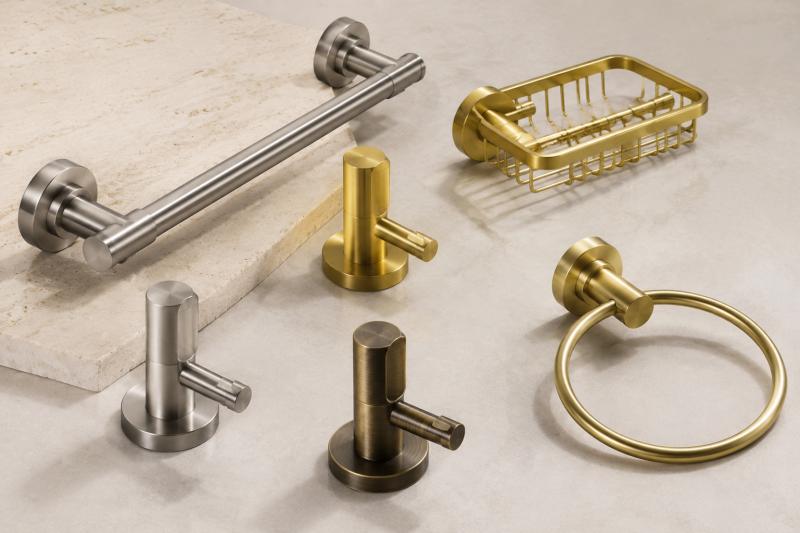
Stainless steel, brass, and zinc alloy each have different advantages for bathroom hardware, and the best choice depends on the application, environment, performance expectations, and project requirements. Stainless steel is usually preferred for high-moisture and high-traffic environments due to its corrosion resistance and strength. Brass is widely selected for premium bathroom projects because of its durability, machining capability, and compatibility with decorative finishes. Zinc alloy provides a cost-effective solution for decorative components and complex-shaped parts where design flexibility is important.
For commercial hotels, residential developments, and bathroom accessory brands, material selection should not be based only on purchase price. The base material, surface treatment, manufacturing process, installation structure, and long-term maintenance requirements all influence the final performance of bathroom accessories.
The primary difference between these three materials is their combination of strength, corrosion resistance, manufacturing flexibility, and cost efficiency.
| Material | Main Advantages | Common Applications | Considerations |
|---|---|---|---|
| Stainless Steel | Excellent corrosion resistance, high strength, hygienic surface | Towel bars, grab bars, shelves, hooks, commercial accessories | Higher material cost and more difficult machining |
| Brass | Strong, durable, excellent finishing capability | Faucets, premium accessories, hinges, decorative hardware | Requires proper alloy selection and surface protection |
| Zinc Alloy | Flexible design options, economical, suitable for casting | Decorative accessories, brackets, handles, small hardware parts | Lower mechanical strength compared with stainless steel and brass |
In professional bathroom hardware manufacturing, there is no universal “best” material. The correct choice depends on where the product will be installed and how it will be used.
Stainless steel is one of the most widely used materials for commercial and residential bathroom hardware because it offers a strong balance between durability, corrosion resistance, and maintenance efficiency.
The biggest advantage of stainless steel is its resistance to moisture and oxidation. Bathrooms naturally create challenging conditions because products are frequently exposed to water, humidity, cleaning chemicals, and temperature changes.
High-quality stainless steel hardware provides:
Strong structural performance for frequently used accessories
Good resistance to rust and corrosion
Easy cleaning and maintenance
Long service life in humid environments
Compatibility with modern commercial bathroom designs
For applications such as towel rails, shower shelves, robe hooks, and public washroom accessories, stainless steel is often selected because reliability is more important than decorative complexity.
Not all stainless steel is identical. The grade significantly affects performance.
304 stainless steel is commonly used for general bathroom applications because it offers good corrosion resistance and cost efficiency.
316 stainless steel provides enhanced resistance to chloride exposure and is often considered for more demanding environments, such as:
Coastal hotels
Swimming pool facilities
Marine-related projects
High-humidity commercial spaces
However, selecting a higher-grade material does not automatically guarantee better performance. The final result also depends on manufacturing quality, welding processes, polishing, surface treatment, and installation methods.
Brass remains a preferred material for premium bathroom projects because of its excellent processing characteristics and ability to achieve high-quality finishes.
Many luxury bathroom products, including faucets, hinges, decorative fittings, and high-end accessories, use brass as the core material.
Brass offers several advantages:
Compared with stainless steel, brass is easier to machine into complex shapes and detailed components. This makes it suitable for products requiring precise manufacturing and refined designs.
Brass works well with various decorative treatments, including:
Chrome plating
Brushed finishes
Polished finishes
PVD coatings
Antique finishes
This allows designers and architects to create consistent bathroom styles across hotels, luxury apartments, and residential projects.
High-quality brass components provide excellent durability when properly manufactured and protected with suitable surface treatments.
However, brass products require careful quality control. Poor-quality brass alloys or inadequate finishing processes may lead to surface discoloration, corrosion, or reduced service life.
A reliable bathroom accessories supplier should provide clear information about brass composition, finishing technology, and quality inspection procedures.
Zinc alloy is commonly used in bathroom hardware manufacturing because it offers excellent design flexibility and cost advantages.
Unlike stainless steel and brass, zinc alloy is particularly suitable for die-casting processes, allowing manufacturers to produce complex shapes efficiently.
Zinc alloy provides:
Excellent shape flexibility
Efficient mass production capability
Competitive pricing
Good surface finishing possibilities
Lightweight product construction
It is often used for:
Decorative hooks
Handles
Small accessory components
Brackets
Bathroom fittings with complex designs
For projects where appearance and budget control are major considerations, zinc alloy can be an effective solution.
Compared with stainless steel and brass, zinc alloy generally has lower mechanical strength and may not be the preferred choice for heavy-load applications.
For example, products exposed to repeated pulling forces or structural loads may require stronger materials.
The performance of zinc alloy depends heavily on:
Alloy composition
Casting quality
Surface coating
Environmental conditions
Product design
A professional manufacturer will evaluate the application before recommending zinc alloy or another material.
Corrosion resistance depends on both the material and the surface protection system.
Generally:
316 stainless steel > 304 stainless steel > properly finished brass > zinc alloy
However, this ranking can change depending on coating technology and environmental exposure.
For example, a well-coated brass product with advanced PVD treatment may outperform a poorly finished stainless steel product in certain decorative applications.
Factors affecting corrosion performance include:
Water quality
Cleaning chemicals
Humidity level
Salt exposure
Surface treatment quality
Installation environment
For commercial projects, corrosion testing and finish approval samples are recommended before large-scale production.
Durability is determined by more than the raw material.
A durable product requires:
quality material + precision manufacturing + reliable surface treatment + proper installation design.
For different applications:
Stainless steel is often the preferred option because of its strength and corrosion resistance.
Brass is usually selected where appearance, finishing options, and long-term aesthetic value are priorities.
Zinc alloy can provide attractive designs while maintaining production efficiency.
The correct decision depends on whether the product is expected to support heavy daily use, deliver premium appearance, or achieve a balance between cost and design.
Maintenance requirements directly influence lifecycle cost, especially in hotels, offices, hospitals, and apartment projects.
Stainless steel generally requires simple cleaning and maintains its appearance well when properly maintained.
Recommended practices include:
Avoiding aggressive acidic cleaners
Using soft cleaning materials
Removing water deposits regularly
Brass requires more attention because decorative finishes can be affected by chemicals and improper cleaning methods.
Manufacturers may recommend specific cleaning procedures depending on the coating system.
Zinc alloy products depend heavily on the quality of surface protection. Damaged coatings may expose the base material and reduce durability.
For commercial projects, maintenance instructions should be included during product approval.
For commercial buyers, the decision should follow the application rather than the material preference.
Brass or premium stainless steel is commonly selected because appearance consistency and long-term brand image are important.
Stainless steel is often preferred because durability, easy cleaning, and reliability are critical.
A combination approach is often practical. Structural components may use stainless steel or brass, while decorative accessories may use zinc alloy depending on design requirements and budget.
Working with an experienced bathroom hardware manufacturer allows project teams to optimise material selection across the entire product range instead of selecting every item independently.
Before confirming a supplier, buyers should evaluate more than the product catalogue.
Important questions include:
What material grade is used for each product?
Are material specifications verified during production?
What surface treatment technology is applied?
Can the supplier provide finish samples before mass production?
Are corrosion resistance or durability tests available?
Can the manufacturer maintain colour consistency between batches?
Are replacement parts available after project completion?
Can products be customised according to project requirements?
A capable bathroom hardware manufacturer should provide technical support throughout product selection, sample approval, production, and delivery.
Stainless steel is generally better for applications requiring corrosion resistance and strength, while brass is often preferred for premium designs and decorative finishes. The better choice depends on the product function and project environment.
Yes, zinc alloy can be suitable for decorative bathroom accessories and products requiring complex designs. However, it is less suitable for applications requiring high mechanical strength or heavy loads.
High-quality stainless steel has excellent rust resistance, but performance depends on the stainless steel grade, manufacturing quality, surface treatment, and installation environment.
Brass offers excellent machining performance and supports premium finishes such as PVD coatings, making it popular for luxury hotels, villas, and high-end residential projects.
Hotels usually select materials based on location, traffic level, and design requirements. Stainless steel is common for durability, while brass is frequently used where premium appearance is important.
Choosing between stainless steel, brass, and zinc alloy for bathroom hardware requires a complete evaluation of performance, appearance, maintenance, and project requirements.
Stainless steel delivers excellent durability and corrosion resistance for demanding environments. Brass provides premium aesthetics and manufacturing flexibility for high-end applications. Zinc alloy offers design freedom and cost efficiency for decorative components.
For commercial projects, the most reliable approach is to work with an experienced bathroom hardware manufacturer that can recommend the right material combination based on application, environment, and lifecycle expectations.
LIKEGRO provides professional bathroom hardware and accessory solutions with manufacturing expertise to help customers select suitable materials, finishes, and product configurations for different residential and commercial applications.
Do you have questions or comments about any of our bathroom hardware & slow close toilet seat? We want to hear from you.
Suite 2206, No. 888 North Sichuan Road, Shanghai, 200080, China