 English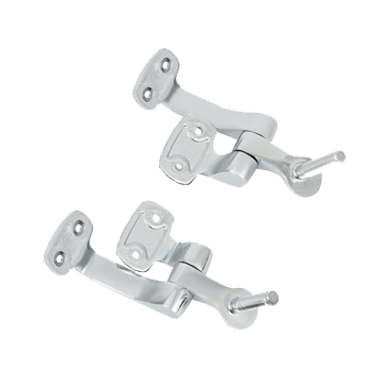
×
Search
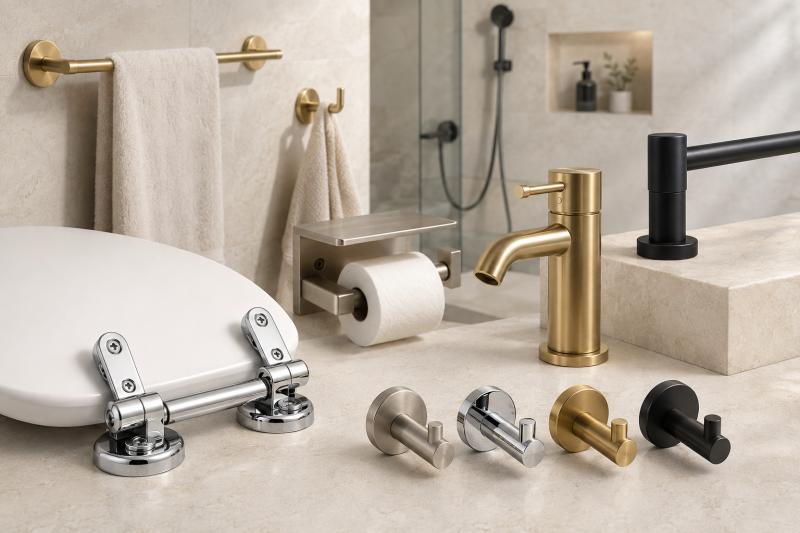
Choosing the right bathroom hardware for a commercial project requires more than matching accessories to the interior design. The specification should reflect the building type, expected traffic, humidity and cleaning conditions, installation substrate, accessibility requirements, maintenance strategy, and the consistency required across dozens or even hundreds of bathrooms.
For hotels, apartment developments, offices, healthcare facilities, schools, retail properties, and other commercial buildings, the best choice is usually the hardware system that delivers the lowest long-term maintenance risk rather than the lowest initial purchase price.
Before placing a project order, buyers should therefore evaluate four areas together: material and finish durability, installation reliability, product standardisation, and the manufacturing capability of the bathroom hardware manufacturer.
A practical commercial specification begins with the operating environment.
A towel rail installed in a hotel guestroom has different requirements from a grab bar in an accessible public washroom. Bathroom hardware installed in a coastal resort may face significantly more corrosive conditions than accessories used in an air-conditioned office building. Likewise, products installed in airports, schools, shopping centres, and other high-traffic facilities are exposed to much more frequent handling.
Before selecting products, project teams should define the following:
| Project Factor | What to Evaluate | Why It Matters |
|---|---|---|
| Building type | Hotel, apartment, office, hospital, school, public facility | Determines expected frequency of use |
| Installation area | Basin, toilet, shower, bathtub, public washroom | Changes moisture and load exposure |
| User frequency | Light, medium, or heavy traffic | Influences material and mounting requirements |
| Environment | Indoor, coastal, humid, chemical-cleaning environment | Affects corrosion resistance |
| Wall structure | Concrete, masonry, tile, drywall, partition | Determines suitable anchors and mounting plates |
| Finish | Chrome, brushed nickel, matte black, brass tone, other finishes | Influences maintenance and project aesthetics |
| Accessibility | Local accessibility and building regulations | May determine dimensions and installation position |
| Maintenance strategy | Replaceable parts, cleaning frequency, spare stock | Influences lifecycle cost |
| Project quantity | Single property or multi-site rollout | Makes batch consistency more important |
This approach prevents a common procurement problem: selecting visually attractive bathroom hardware that performs well in a showroom but is not engineered for the actual commercial environment.
There is no single material that is ideal for every component. Material selection should depend on the function, exposure conditions, required strength, manufacturing process, and target project budget.
Stainless steel is widely specified for commercial bathroom applications because of its strength, corrosion resistance, and suitability for frequently handled accessories.
It is particularly appropriate for products such as towel bars, grab bars, shelves, hooks, mounting components, and hardware exposed to regular moisture.
However, buyers should confirm the actual stainless steel grade rather than accepting a general description such as "stainless steel."
For many indoor applications, 304 stainless steel provides a practical combination of corrosion resistance and cost. More demanding environments, particularly coastal or high-chloride locations, may justify evaluating 316 stainless steel.
The material specified in the quotation should also match the material used in mass production.
Brass remains important for many premium fittings and bathroom components because it offers good machinability, durability, and compatibility with multiple decorative finishing processes.
For hotels and higher-end residential developments, brass components can be particularly useful where substantial product feel and premium surface finishes are part of the design specification.
The key issue is not simply whether brass is used, but where it is used and how the finished component has been processed.
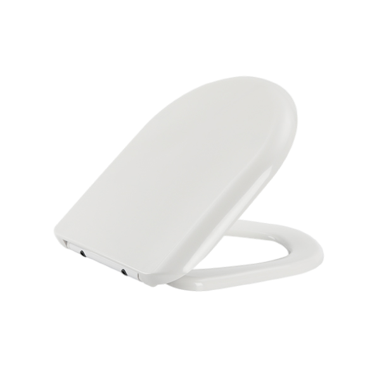
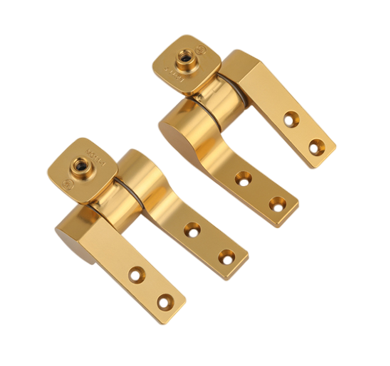
Zinc alloy can provide an efficient solution for brackets, decorative fittings, toilet seat hinges, and complex die-cast components where detailed shapes are required.
A well-manufactured zinc alloy component should not automatically be considered inferior to stainless steel. Performance depends on component design, alloy quality, casting accuracy, surface preparation, plating quality, and the final application.
For this reason, an experienced bathroom hardware manufacturer should recommend materials by application rather than using the same material specification throughout the entire product range.
Finish selection has both aesthetic and technical consequences.
Chrome, brushed nickel, matte black, polished brass, brushed brass, and other decorative finishes can perform very differently depending on the base material, surface preparation, coating technology, product geometry, cleaning chemicals, and environmental conditions.
For large projects, three issues deserve particular attention.
A hotel bathroom may contain a towel rail, robe hook, toilet paper holder, shower accessory, faucet, toilet seat hinge, and other visible fittings.
Even when every item is described as "brushed nickel" or "matte black," products sourced from different production batches or factories can show noticeable colour, gloss, or texture variation.
Procurement teams should therefore approve physical finish samples or a master reference sample before mass production.
Commercial bathrooms are cleaned far more frequently than typical residential bathrooms. Hotels, healthcare facilities, gyms, and public facilities may use detergents and disinfectants repeatedly throughout the product lifecycle.
The finish should therefore be evaluated against the actual maintenance conditions of the project rather than appearance alone.
When testing data is supplied, buyers should also understand exactly what was tested: base material, coating system, test duration, test method, and acceptance criteria.
For a 200-room hotel, colour variation between production lots can become a much larger issue than it would be for a single residential bathroom.
The supplier should therefore be capable of maintaining controlled reference standards throughout production.
This is one reason why working directly with a capable bathroom hardware manufacturer becomes increasingly important as project quantities increase.
Traffic level should influence both the visible product and the mounting system behind it.
In a private hotel guestroom, a robe hook may be used only occasionally. The same type of hardware installed in a gym changing room or public washroom could be handled hundreds of times within a much shorter period.
For heavily used environments, evaluate:
wall thickness and mounting plate design;
screw and anchor specifications;
resistance to rotation or loosening;
joint design;
load-bearing components;
exposed edges and corners;
ease of maintenance;
availability of replacement components.
The mounting system is especially important. A strong towel bar connected to an inadequate anchor is still an unreliable installation.
Commercial buyers should therefore review installation drawings and fixing methods before approving the order rather than treating screws and mounting plates as insignificant accessories.
Hotels and apartment developments require a different balance from public washrooms.
Durability remains important, but designers also need consistent aesthetics across multiple accessories and rooms. At the same time, operators need products that can be replaced efficiently during maintenance.
For these projects, standardisation is particularly valuable.
Instead of specifying unrelated products individually, consider creating a standard bathroom package containing coordinated items such as:
towel bars + towel rings + robe hooks + toilet paper holders + shower baskets + toilet seat hardware + faucets + shower fittings.
Using a coordinated product family simplifies approval, procurement, installation, spare-part management, and future renovation.
For multi-phase developments, the procurement team should also confirm whether the same model, finish, and replacement components can remain available throughout the project period.
A component that saves a small amount at the purchasing stage may become expensive if the property later has to replace complete accessory sets because matching replacement parts are unavailable.
Humidity alone is not the only concern. Coastal environments introduce salts that can accelerate corrosion, while swimming pools, spas, and certain healthcare or industrial environments may introduce additional chemical exposure.
In these projects, specify the complete material system rather than requesting "corrosion-resistant bathroom hardware."
That specification can include:
base material + surface treatment + coating system + fastener material + mounting hardware + expected environment.
Fasteners are easy to overlook. A corrosion-resistant accessory mounted with unsuitable screws may still develop staining or installation problems.
Mixed-metal contact should also be considered where components remain wet for extended periods.
For projects in unusually aggressive environments, provide the bathroom hardware manufacturer with information about the building location and cleaning conditions before finalising the specification. This allows the manufacturer to recommend the material and finish combination based on actual use conditions.
Yes. Accessibility requirements can affect the type, position, dimensions, structural performance, and installation of certain bathroom components.
The exact requirements vary by country and project jurisdiction, so architects and contractors should always work from the applicable local building and accessibility standards.
For example, under U.S. ADA requirements, accessible water-closet areas require specific side and rear grab-bar arrangements. Grab bars must meet defined dimensional, clearance, surface, and structural requirements; U.S. Access Board guidance also states that the grab bar, fastener, mounting device, and supporting structure must withstand a 250 lb force at any point.
This demonstrates an important principle for commercial procurement: accessibility hardware cannot be selected independently of wall construction and room layout.
Toilet paper holders, shelves, hooks, dispensers, and other accessories may also need to be positioned so they do not obstruct required clearances or accessible elements.
Accessibility should therefore be checked during the drawing and specification stage—not after the hardware arrives on site.
Not necessarily, but consolidating compatible products with one qualified supplier can reduce several project risks.
When accessories are sourced independently from multiple suppliers, the project team must manage different finishes, mounting systems, lead times, packaging standards, quality tolerances, and replacement policies.
Consolidation can simplify these variables, particularly for hospitality and multi-unit developments.
The more important question is whether the supplier has control over the critical manufacturing processes.
LIKEGRO, for example, positions its business around bathroom fittings including toilet seat hinges, faucets, showers, bathroom accessories, dampers, and related components, while its manufacturing background includes processes such as die casting, machining, surface treatment, mould manufacturing, and injection moulding.
For commercial buyers, this type of manufacturing integration can be valuable because product design, finish development, component matching, and production quality often need to be coordinated rather than managed as separate purchasing activities.
Price should be only one part of supplier evaluation.
Before placing a commercial project order, ask the potential bathroom hardware manufacturer for information that demonstrates whether the company can control production from approved sample to final shipment.
Key questions include:
What is the actual material specification for each component?
Which manufacturing and finishing processes are controlled directly?
Can you provide samples using the exact material and finish proposed for mass production?
How is finish consistency controlled between production batches?
What corrosion, load, cycle, or functional testing is available for the selected products?
Can mounting drawings and installation instructions be supplied before approval?
Can packaging be organised by room, building, phase, or SKU if required?
What is the normal process for replacing defective or damaged components?
Will spare parts remain available after project completion?
How are engineering changes controlled after the approved sample?
The answers help distinguish a transactional supplier from a manufacturer capable of supporting a long-term project.
The most effective cost reduction usually comes from specification optimisation, not simply choosing cheaper products.
For example, a project may not require the same material specification for every accessory. High-load or permanently wet components may justify higher-performance materials, while decorative, low-load items in dry areas can use a more economical construction.
Standardising dimensions and mounting systems can also reduce tooling, installation, inventory, and replacement costs.
The procurement team should therefore work with the manufacturer to divide products into performance categories:
critical safety components → high-use functional hardware → wet-zone accessories → decorative low-load accessories.
Each category can then receive an appropriate material, manufacturing, testing, and quality-control specification.
This is generally more efficient than either over-specifying every accessory or purchasing solely according to unit price.
When comparing quotations, create a supplier comparison based on equivalent specifications.
A quotation that appears 10% cheaper may not actually represent the same product if it uses a different base material, coating thickness, mounting plate, fastener, packaging method, or testing standard.
A more useful comparison looks at:
product specification + manufacturing capability + quality control + project coordination + lead-time reliability + replacement support + total delivered cost.
This becomes especially important when the project includes hundreds or thousands of pieces of bathroom hardware.
At that scale, even a small recurring defect—loose brackets, inconsistent finishes, missing installation parts, poorly labelled cartons—can create substantial rework costs.
Durability depends on the environment and product function. Stainless steel is commonly selected for demanding commercial applications, while properly manufactured brass and zinc alloy components can also perform well for appropriate fittings. Base material, finish quality, mounting design, and cleaning conditions should be considered together.
Neither material is universally better. Stainless steel is particularly useful where corrosion resistance and structural strength are priorities. Brass is well suited to many fittings and premium decorative applications. Product geometry, finish requirements, environment, and budget should determine the final choice.
Yes, but the coating specification should be evaluated carefully. Commercial cleaning frequency, scratching risk, surface preparation, and batch consistency become more important when matte black hardware is installed throughout hotels, apartments, or public facilities.
Hotels should focus on finish consistency, corrosion resistance, reliable mounting systems, coordinated product families, easy cleaning, spare-part availability, and the ability to reproduce the same specification across multiple rooms and project phases.
Ideally, yes. Mounting requirements, wall reinforcement, electrical or plumbing interfaces, accessibility clearances, and accessory positioning can affect construction. Confirming the hardware specification early helps avoid site modifications later.
The right bathroom hardware for a commercial project is the hardware that continues to perform after thousands of uses, repeated cleaning cycles, long-term moisture exposure, and routine maintenance—not simply the hardware that looks best when first installed.
Successful specification requires project teams to consider material, surface finish, mounting structure, traffic level, accessibility, replacement strategy, and manufacturing consistency as one system.
For hotels, apartments, offices, public facilities, and other large developments, involve the bathroom hardware manufacturer before final product approval. Providing project type, quantities, drawings, target finishes, environmental conditions, installation requirements, and expected delivery schedule allows the manufacturer to recommend a more appropriate specification and identify potential risks before mass production.
For a commercial bathroom project, you can send LIKEGRO your product list, quantities, drawings or reference designs, required finishes, target market, and project schedule for specification review and quotation.
Do you have questions or comments about any of our bathroom hardware & slow close toilet seat? We want to hear from you.
Suite 2206, No. 888 North Sichuan Road, Shanghai, 200080, China